
Botanical Illustration
Best for:
Art printsHome décorGreeting cardsSocial media postsJournal illustrationsPhone wallpapersStationery designs
Sample prompt used to generate the hero image
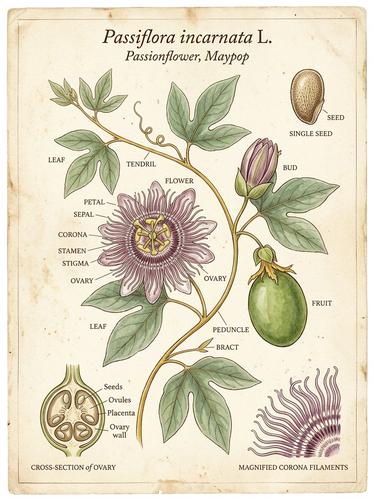
Botanical illustration of a Rosa damascena (Damask rose) in full bloom with one bud and three leaves on a thorned stem, scientific illustration style on cream cotton rag paper, 3:4 vertical format. Rendered in fine watercolor — delicate transparent washes building up the petal colors from pale blush to deep pink at the edges. Every stamen, pistil, and petal vein is individually rendered with hairline detail. Two small anatomical details in the lower corner: a cross-section of the hip and a magnified view of the leaf edge showing serration. Latin name in italic copperplate below. Soft natural daylight. Museum-quality scientific illustration.Prompt Variations
Section titled “Prompt Variations”Botanical illustration of [SPECIES — e.g., Papaver somniferum (opium poppy)] in [STAGE — e.g., full bloom with seed pods], scientific illustration on cream cotton rag paper, [FORMAT]. Fine watercolor — transparent washes building color. Every [DETAILS — e.g., petal vein, stamen, pollen grain] individually rendered. [ANATOMICAL DETAILS — e.g., cross-section of seed pod in lower corner]. Latin name in italic below. Museum-quality.Botanical illustration of an arranged composition of [SPECIES LIST — e.g., Sweet pea, Nigella, Scabiosa, and Astrantia] on cream cotton rag paper, [FORMAT]. Arranged as a naturalistic bouquet — stems crossing, flowers at different angles and stages of bloom. Fine watercolor with transparent layered washes. Individual vein and stamen detail on every flower. Subtle shadowing where stems overlap. Botanical accuracy maintained despite the artistic arrangement. Museum-quality.Botanical illustration showing the complete life cycle of [SPECIES — e.g., Helianthus annuus (sunflower)] on cream cotton rag paper, [FORMAT]. Five stages arranged left to right: seed, seedling, vegetative growth, flower bud, full bloom. Each stage rendered in fine watercolor with scientific accuracy. Hairline ink root structures visible below soil line. Anatomical callout: cross-section of the composite flower head showing individual florets. Latin name and stage labels in italic copperplate.Botanical illustration of [SUBJECT — e.g., Citrus sinensis (blood orange) — whole fruit, halved cross-section showing ruby-red segments, a single separated segment, and a flowering branch with blossoms], on cream cotton rag paper, [FORMAT]. Fine watercolor — the cross-section shows translucent juice vesicles catching the light. Seeds detailed separately in the margin. Leaf showing glossy surface and oil glands. Latin name below. Museum-quality scientific illustration.Botanical illustration in the style of Maria Sibylla Merian showing [PLANT] with associated [INSECT — e.g., Danaus plexippus (Monarch butterfly) in all life stages — egg, caterpillar, chrysalis, adult — arranged on the host milkweed plant], on cream cotton rag paper, [FORMAT]. Fine watercolor. Both plant and insect rendered with equal scientific precision. The insect interacts naturally with the plant — caterpillar feeding, butterfly resting. Anatomical details in the margins. Latin names for both species. Natural history museum aesthetic.Create a scientific botanical illustration of [SPECIES] on cream cotton rag paper — fine watercolor washes with every petal, leaf, and vein rendered in detail, an anatomical callout (cross-section or magnified detail) in the corner, and the Latin name in italic copperplate below. Museum-quality. 4:5 vertical format.Create a botanical composition of [SPECIES LIST] in a naturalistic arrangement — fine watercolor, detailed vein and stamen work, cream cotton rag paper, Latin names labeled. 4:5 vertical format.Create a botanical life cycle illustration of [SPECIES] showing five growth stages — seed, seedling, bud, bloom, and seed head — in fine watercolor with anatomical callouts and Latin names on cream paper. 16:9 landscape format.botanical scientific illustration of [SPECIES], cream cotton rag paper, fine watercolor, detailed veins and stamens, anatomical callout, Latin name in italic, museum quality --ar 4:5 --s 150botanical composition, [SPECIES LIST], naturalistic arranged bouquet, fine watercolor, cream paper, Latin labels, museum quality --ar 4:5 --s 150botanical life cycle illustration, [SPECIES], five growth stages, fine watercolor, anatomical callouts, Latin names, cream paper --ar 16:9 --s 100botanical scientific illustration, [SPECIES], cream cotton rag paper, fine watercolor, detailed veins and stamens, anatomical callout, Latin name, museum qualityNegative Prompt
photograph, dark background, modern digital art, abstract, cartoonbotanical composition, [SPECIES LIST], naturalistic arrangement, fine watercolor, cream paper, Latin name labels, scientific illustrationNegative Prompt
photograph, decorative flower painting, dark, blur, low qualityImage-to-Image Transformations
Section titled “Image-to-Image Transformations”Using the attached photo of this plant/flower, recreate it as a scientific botanical illustration on cream cotton rag paper. Render every petal, leaf, and stem with fine watercolor washes and hairline ink detail. Add anatomical callouts — a cross-section or magnified detail in the corner. Include the Latin species name in italic copperplate below the specimen. Museum-quality scientific illustration aesthetic.Tips & Best Practices
Section titled “Tips & Best Practices”- Latin names add authenticity: Including the binomial (e.g., “Rosa damascena”) makes it feel like a real scientific illustration.
- Cream paper is the substrate: “Cream cotton rag paper” is the traditional substrate for botanical art. White paper looks too clinical.
- Watercolor washes build up: Describe “transparent washes building color” — this is the technique that creates the characteristic botanical delicacy.
- Anatomical callouts: Cross-sections, magnified details, and seed diagrams in the margins are what distinguish botanical illustration from flower painting.
- Common pitfalls: “Flower painting” produces decorative art. “Botanical illustration” produces scientific art. They’re different.
- Pairs well with: Illuminated Manuscript (similar hand-crafted aesthetic), Ukiyo-e Woodblock (similar nature focus, different culture)